The Window That Never Clocks Off: Winter Shopfront Branding for UK High Streets
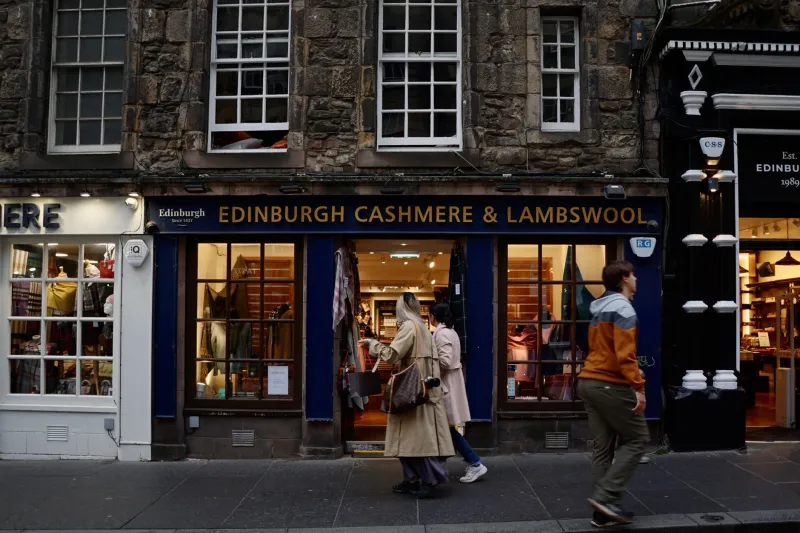
By half four on a November afternoon, the light has gone. The market square empties, the bus queue shuffles into position, and the shopfronts along the parade split into two camps: the ones that still look like they're saying something, and the ones that look like closed eyelids.
If you run an independent shop, café or salon, you probably spend your waking hours thinking about the inside — the stock rotation, the coffee machine, the chair that squeaks. But between four and eight in the evening, the only part of your business most people actually meet is the glass. It doesn't take a booking. It doesn't answer questions. It never books a day off. Which is precisely why it deserves ten minutes of your attention this week.
Your audience changes the moment the sun goes
Daytime footfall is people with a purpose: a pint of milk, a birthday card, a trim before the school pick-up. They're moving fast and they already know what they want.
The evening crowd is different. It's commuters walking the last stretch from the station, dog owners doing the loop, people drifting towards the chippy, parents on the reverse school run. They're not shopping. They're deciding whether to shop — someday. That's not a sales job, it's a brand job. And a dark or muddled window quietly fails it every single night.
Three jobs, and only three
An evening window has room for a short, specific message. Think of it as a handshake through glass:
- Who is this? Readable from the opposite pavement, in the rain, at a glance.
- When are they back? Today's hours are useless at 6pm. Tomorrow's matter.
- Why should I care? One product, one offer, one mood. Not five.
Everything else in the window is decoration competing with those three sentences. More stuff rarely means more information — usually the opposite.
Light is the cheapest brand asset you own
A lit window says we are here and we are open. An unlit one says closed, or worse, closed down. Neither is the story you want a passer-by telling their partner over dinner.
You don't need a lighting designer. You need a warm bulb and a plug timer. Swap out any cold, blue-white LED in the window fittings for something around 2700K — the sort of glow a living room has, not a dental surgery. Then put two lamps at different heights behind the display and set them on a cheap timer to come on at dusk and go off around 10pm. Depth and shadow do more for a window than brightness ever will.
One soft light left on in the back of the shop is worth the electricity too. It gives the glass somewhere to look, and makes the whole place feel occupied rather than abandoned.
The opening hours sign nobody can read
Here's a small thing that costs almost nothing and is wrong on roughly half the high streets in Britain: the hours sign is in six-point handwriting, taped at eye level behind a display, or printed in 2019 and never updated.
Put the hours on the glass itself, low enough for someone to read while walking, in the highest-contrast type you can stand. Then add the sentence that actually helps: back tomorrow at 8.30. If you open late on a Thursday, say so there, not only on your website. And if you've stopped opening on Sundays, take the old sign down — a faded promise in the window is a small lie, and people notice small lies.
The dusk walk-past test
This takes fifteen minutes and no money, and it will tell you more than any brand workshop.
Go out at the exact time your last member of staff locks up. Cross to the pavement where the bus actually stops. Walk past your own shop at normal walking speed, in normal clothes, without stopping. Then, from memory, answer three questions: what does that shop sell, when is it next open, and what one word describes it?
If you can't, you've found your problem. If you want a second opinion, drag along a friend who doesn't use your shop and ask them the same three things. Do it on a wet Tuesday, not a dry Saturday — the wet Tuesday is the honest test.
The low-cost fix list
- Timer plug and two warm lamps — roughly £15–25 from any DIY shed.
- Replacement warm bulbs for window fittings — under a tenner if you only need a couple.
- New hours vinyl with tomorrow's opening time included — £20–40 from a local sign printer.
- An A4 laminated “back at…” board for the door — a fiver and a laminator.
- A clear-out. Remove boxes, gaffer tape, dead plants, and any poster older than the current season. Free, and the biggest single upgrade most windows get.
- A single focal point. One product, one outfit, one cake. The three-second read from a bus window is the target.
- A consistency check. Does the window say the same thing as your website header and your Instagram bio? If not, pick one and align the other two.
What you're really buying
None of this is about looking fancy. It's about trust at a glance — the feeling a stranger gets walking home in the dark that yours is the sort of place that has its act together. That feeling compounds. It's the difference between being passed every evening for a year and being remembered the one evening someone actually needs what you sell.
Your window is the only member of staff that works every night of the winter without a break. Give it a decent briefing.