Quiet Confidence: How UK Small Businesses Can Be Seen Without Boasting
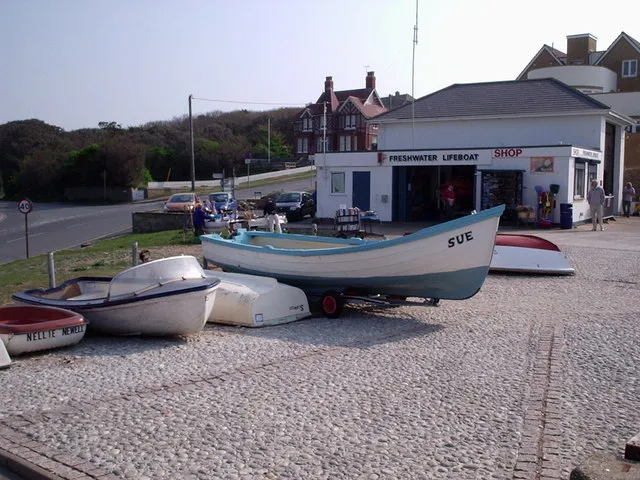
Photo: Alan Swain, CC BY-SA 2.0, via Wikimedia Commons
There is a particular kind of UK business owner who apologises for being good at their job. They mention a service almost as an afterthought. They say things like 'we're not ones to blow our own trumpet' and then quietly hope the right customers find them anyway. Restraint is decent. It is often likeable. But a business that never says plainly what it does is not being modest. It is being muffled.
Make It Stand Out is not in the business of turning quiet owners into headline-hungry founders. The aim is simpler: help good businesses be recognisable to the people who need them. That means finding a middle path between cringing silence and empty noise.
Showing off versus showing up
Showing off is attention for its own sake. It is the superlative no one asked for, the claim that cannot be checked, the post that says 'big things coming' and then says nothing. Showing up is different. Showing up means making it easy for the right customer to recognise themselves and take the next step.
A joiner who says 'I fit kitchens across South Manchester and I'm usually booked six weeks ahead' is not boasting. They are being useful. A competitor who says 'We are the best kitchen fitters in the North West' is being loud and vague. One sentence gives you a location, a specialism and a signal of demand. The other gives you a headache.
UK customers tend to distrust pushiness. We like understatement. We like people who do a good job and do not make a performance of it. But understatement only works when there is a clear statement underneath. 'We do OK' is not a positioning. 'We repair bikes, mostly for commuters, and we will tell you if it is not worth fixing' is.
Where quiet understatement quietly costs you
Website copy
Too many small business homepages open with 'Welcome to our website' and 'We are passionate about quality'. A visitor cannot tell what you sell, who it is for, where you are, or what to do next. That is not modesty. It is a missed handshake.
Try a first screen that says: 'Bookkeeping for small studios and shops in Bristol. Fixed monthly fee. No surprise invoices.' It is plain, specific and confident without a single exclamation mark.
Shopfronts and signs
A faded fascia, a blank window and an opening hours sign that has been rewritten three times in biro does not say 'understated'. It says 'closed, probably'. Modest boldness might be one clean line on the glass: 'Coffee, bread, and a bench in the sun. Open 7.30 to 4.' You do not need a neon arrow. You do need clarity.
Social posts
Endless screenshots of lovely feedback are nice for you and meaningless to a stranger. A better post says: 'Here is the problem a client brought us this week, what we changed, and what it cost.' That is evidence. It is calm. It does the selling without a hard sell.
Pitches
'Hi, I'm a freelance designer, don't know if you need any help?' is not humility. It is asking permission to exist. Try: 'I help independent shops in Leeds look as good online as they do on the high street. I have attached two examples and a one-page price guide. If it is not useful, no reply needed.' The last line gives the reader an out. Very British. Also very effective.
A modest boldness framework: claim, prove, place, repeat
1. Claim
Write one sentence that says what you do, for whom, and where. Keep adjectives out unless you can prove them. Use a simple shape: 'We help [who] [outcome].' Or: 'We [do X] for [who] in [where].' If you cannot say it out loud without laughing, it is too grand. If you can say it without any detail, it is too vague.
2. Prove
Choose one piece of proof. A number, a named process, a guarantee, a before-and-after, or a review with context. Not six pieces. One. 'We have fitted 43 kitchens in Stockport since 2022' is stronger than a wall of gold stars. 'We answer emails within one working day' is stronger than 'excellent customer service'.
3. Place
Put the claim where customers already look. Your Google Business Profile. Your shop window. Your invoice footer. Your email signature. The local magazine that people actually pick up. There is no point building a billboard on the bypass if your customers are on the high street.
4. Repeat
Consistency beats volume. The same clear claim in five ordinary places is better than a new slogan every month. Modest boldness is repetition without shouting. It is the same handshake, offered steadily.
The 'would I say this out loud?' test
Read your website copy aloud to a friend in a cafe. If you cringe, edit it. If it sounds like a robot wrote it, edit it again. If it sounds clear and a little proud, keep it. This test is not about dumbing down. It is about removing the padding that makes you sound like everyone else.
When to be a bit louder
Some moments deserve clear promotion: a new location, a price change, a new hire, an award, a change to opening hours. Even then, stick to plain facts. 'We have moved two doors down. Same coffee, more seats.' That is not showing off. It is telling people where you are.
If you are the only business in town that does a particular thing, say so. If you have solved a problem that customers keep asking about, write it down. Quiet confidence is not the same as keeping secrets.
A small exercise for this week
Open your website, your Google Business Profile and your invoice template. Write one claim sentence. Put it on all three. Ask three customers if it sounds like you. Change one thing based on what they say. That is enough for now.
The goal is not to become a brand that shouts. It is to become one that can be heard.