The Pavement Pitch: What Your Shop Says Before Anyone Walks In
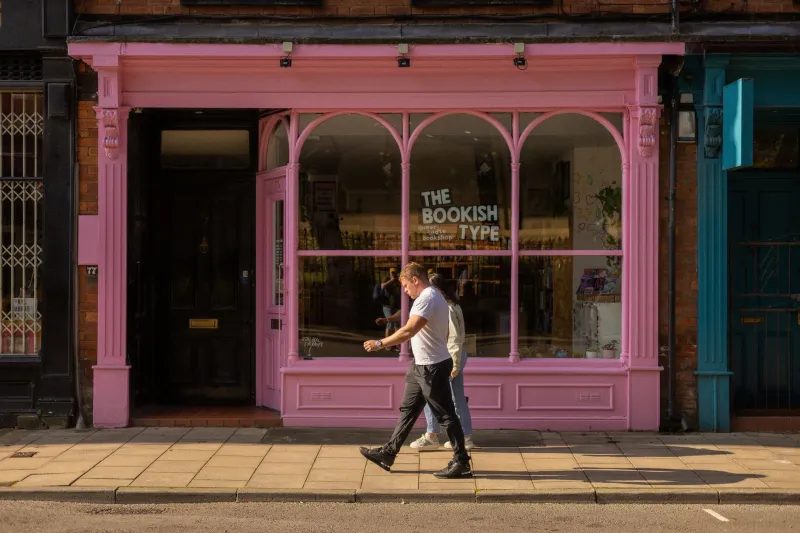
Most brand audits start at the window display. Fair enough — it is the bit you control, the bit you tweak on a Sunday evening, the bit that gets the Instagram photo. But your customer does not teleport to the glass. They arrive from the bus stop, the car park or the next shop along, and they form an opinion during the last few metres. That stretch — kerb to counter — is where your brand either looks intentional or looks like it has been beamed down from nowhere.
Here is a practical check for UK shop owners. No redesign, no big spend, just an honest walk past your own front door.
Start at the kerb, not the window
Stand on the opposite pavement. Look at your shop as a passing stranger would. Can you tell what it sells? Can you tell what it feels like to walk in? Is the sign legible from that distance, or does it rely on you already knowing the name?
This is not about making everything bigger. It is about removing the small hesitations. A bin bag left by the door, a faded poster in the window, a handwritten note that has been rained on twice — none of these are fatal, but together they suggest a business that is not quite paying attention. Customers notice that feeling even if they cannot name it.
One useful trick: take a photo from the kerb on your phone. Photos flatten everything and make the clutter obvious. What survives the photo is usually what is doing the real branding work.
The A-board is a sentence, not a shout
If you use an A-board, treat it as the first line of a conversation. Too many boards try to say everything at once: opening hours, offers, QR codes, a quote, a chalk drawing of a coffee cup and a message about dog-friendly staff. The result is a visual mumble.
Pick one job for the board. Is it telling people you are open? Is it naming today's lunch? Is it making a joke that fits your brand? One clear job beats five half-jobs. And check it from a few metres away — if you have to squint, passing trade will not bother.
Also worth a quick look: is the board clean, upright and not blocking the pavement? In the UK, local councils have views on this sort of thing, and so do wheelchair users and parents with pushchairs. Practical courtesy is part of your brand whether you planned it that way or not.
The doorway does quiet work
Doorways are underrated. They are the frame around the first step inside. A grubby door handle, a chipped frame or a notice taped at eye level can undo a lovely window display in seconds.
Check three things. First, can someone see themselves coming in? Glass that is smeared or covered in old stickers makes the shop feel closed even when it is open. Second, does the door say what to do? Push, pull, automatic — small clarity, big difference. Third, is there anything stuck to the door that should live elsewhere? Delivery notices, card payment stickers and temporary signs all have their place, but a door covered in them starts to look like a noticeboard rather than an entrance.
A tidy doorway is not fancy. It is just a signal that someone is minding the shop.
The mat and the first step
The mat is the handshake before the handshake. If it is curled at the corner, sodden, or says something unrelated to your business, it is a tiny friction point. A plain, clean mat does more for your brand than a novelty one that has seen better days.
The first step inside matters too. Customers are adjusting — from street noise to indoor quiet, from bright daylight to shop lighting. Give them a second to land. If the first thing they meet is a stack of boxes, a mop bucket or a staff coat on a chair, the brand story gets interrupted before it starts.
You do not need a grand entrance. You need a clear one. A bit of space, a sightline to the counter or the product, and lighting that does not make people squint. That is the whole job.
The first ten seconds inside
Once someone is in, the greeting sets the tone. This is where brand identity stops being visual and becomes behavioural. A rushed hello, a glare over a laptop, or complete silence all tell the customer something. So does a genuine, low-pressure welcome.
There is no single right greeting for every shop, but there is a right one for yours. A hardware shop, a bakery and a beauty salon can all say hello differently and still be consistent. The test is simple: does the greeting match the impression the pavement and doorway just made? If the outside promises calm and the inside delivers chaos, customers feel the gap even if they cannot explain it.
One afternoon, three metres
Set aside an hour. Walk the approach from three directions, take photos, and note anything that makes you hesitate. Then fix the cheap stuff first: clean the door glass, straighten the board, replace the mat, clear the first metre inside, and brief whoever is on the till about the welcome you actually want.
Standing out on a UK high street is not always about a bigger sign or a louder offer. Sometimes it is about the last few metres before the bell rings — the bit customers meet before they meet you. Get that bit right and the rest of the shop has a much easier job.